
Linton was brought in as the full product development partner — owning the path from a working prototype through to a production-ready glass product, including the supplier relationship that would carry the brand long after launch.

Case Study
Mary Go Round: Anti-Clog Rotating Bowl
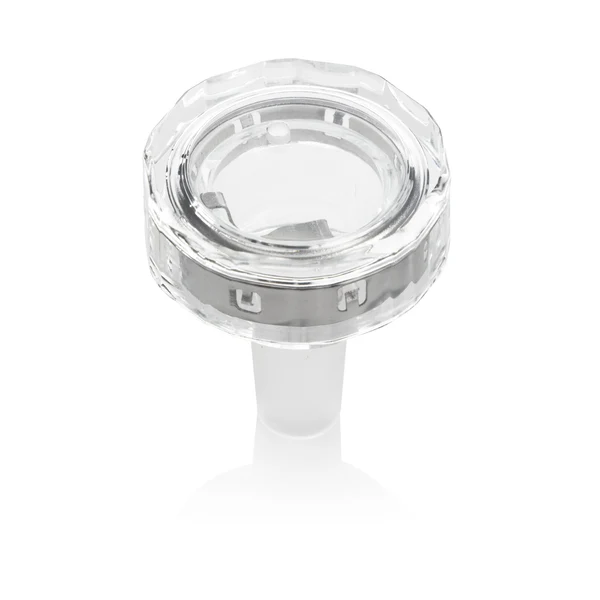
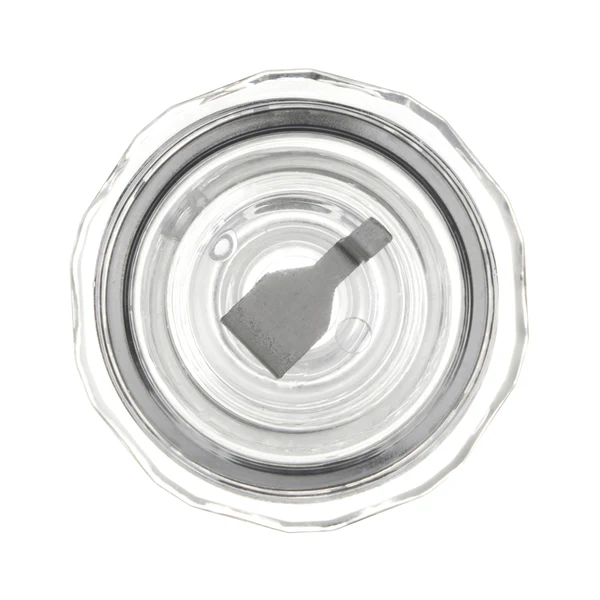
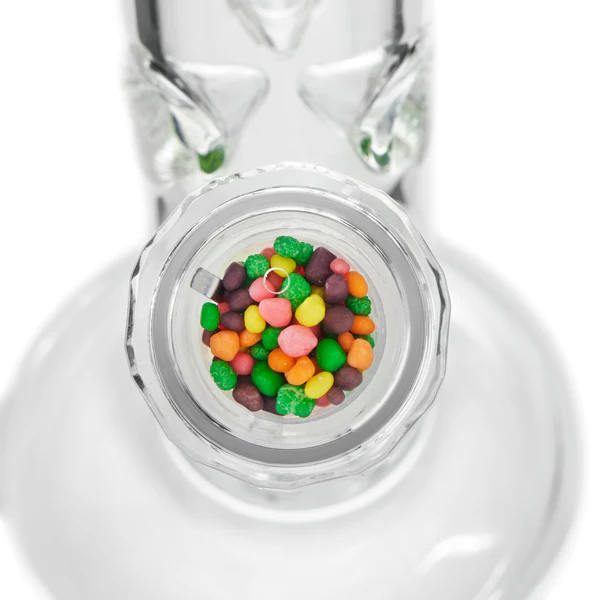
Witt’s Widgets partnered with Linton Group to engineer and launch the Mary Go Round Bong Bowl — a patent-pending rotating glass bowl that solves three long-standing problems in a category that hadn’t seen real innovation in decades: clogs, burnt-through hits, and messy cleanup. Linton led the engagement from product engineering through production execution, taking an unusually shaped glass component from a kitchen-table prototype to a finished, shippable product.
Overview
Mary Go Round set out to fix a product category most people had stopped questioning. Founder Tom Wittneben — an engineer by training — had spent over a year and 200+ revisions in his apartment prototyping a bowl that wouldn’t clog, wouldn’t keep burning between hits, and didn’t require a toothpick to clean. The result was a rotating glass bowl with a built-in scraper and a lid that controls hit size and indexes to fresh herbs with a turn.
Translating that prototype into a manufacturable product was a separate problem. The geometry was unusual, the tolerances mattered, and the entire product needed to be produced in glass — a material with little forgiveness for design-for-manufacturing mistakes. Witt’s Widgets brought Linton Group in to lead product engineering, design for manufacturability, and production execution, and to operate the supplier relationship that would make the product reliably reproducible at scale.
Challenge
Mary Go Round presented a set of challenges that don’t show up in most consumer-glass projects:
- Unusual Geometry in a Difficult Material. The rotating bowl-and-lid system relies on tight interfaces between two glass parts that have to seat, rotate, and re-seat reliably — geometry that’s hard to hold in glass without distortion or excess variation between units.
- Functional Tolerances, Not Just Cosmetic Ones. Unlike most decorative glass, every unit had to perform the same way mechanically: the lid had to rotate smoothly, the scraper had to clear the bowl, and the airflow had to stay consistent shot-to-shot. Quality wasn’t a finish standard, it was a functional one.
- Manufacturability at Scale. The design had to be repeatable across a production run, with a cost structure that worked at the founder’s target retail price and a process that didn’t require hand-finishing every piece.
Witt’s Widgets needed a partner who could take the prototype geometry, hold the parts of it that mattered for performance, and adapt the rest to a real manufacturing process — without losing what made the product different.
Patent Pending
Anti-Clog Rotating Bowl
200+
Prototype Iterations Before Production
500+
Customers Since Soft Launch
Patent Pending
Anti-Clog Rotating Bowl

200+
Prototype Iterations Before Production
500+
Customers Since Soft Launch
Partner With Linton to Bring Your Product to Market
We provide full lifecycle support from concept to manufacturing, acting as a true partner invested in your long-term success.