
Impact of the Chinese New Year on Production Processes

Clients Frequently Inquire About How The Chinese New Year (CNY) Affects Production Processes

Drawing from over a decade of experience navigating this unique period, Linton Group offers insights to better understand the production landscape from the end of January to mid-late February each year.

From a factory’s standpoint, the weeks leading up to CNY are a highly competitive time for securing production capacity. Much like the bustling American shopping malls just before Christmas, factories experience a surge in demand starting mid-December, as every client aims to finalize shipments before the CNY shutdown.


Astute clients also vie for priority in the production queue when factories resume operations post-CNY.

This strategy is driven by several factors:

  • Securing production capacity amidst the backlog of demand accumulated over nearly a month.
  • Timing production in mid/late February to align with early summer deliveries.
  • Locking in pre-CNY pricing to mitigate potential price increases after the holiday.

The production sequence typically follows a step-based approach. For instance, in manufacturing a backpack, factories begin by ordering raw materials such as fabric from suppliers.

Once materials are received, they proceed to cut the fabric for the entire order, followed by decorating it with elements like logos and brand artwork. Subsequent steps include sewing, assembly, quality control, and packaging.

In The Context of CNY

It is more practical to pause production between these steps rather than attempting to complete half of the order before CNY and the remainder afterward.

We continually learn and adapt to the unique challenges presented by CNY to serve our clients effectively.

Understanding the production line dynamics during this period can empower our client partners to make informed supply chain decisions.
How to Vet a New Supplier: Lessons from the Field

When it comes to sourcing from overseas factories, many seasoned professionals have stories to tell. At Linton Group, we understand the importance of thoroughly vetting new suppliers to avoid costly mistakes.

Here’s a compelling story from our founder, Ben Kong, that underscores the need for diligence and the lessons learned along the way.

A Lesson Learned the Hard Way

Over a decade ago, Ben Kong was working with a new supplier for a client. The initial transaction was smooth, involving a test purchase order (PO) of $5,000 worth of mugs. The goods were delivered, the client was happy, and everything seemed perfect.

With the initial success, the next PO was significantly larger—around $50,000. A 30% deposit was made, but then the supplier vanished, taking $16,000 with them.

This was a classic case of long-play fraud, where the supplier delivered on the first order to gain trust and then disappeared with the deposit from the second, larger order.

Avoiding Supplier Scams: Key Steps

Such scenarios are not uncommon, but they can be avoided with careful vetting. Here are some crucial steps to ensure you’re dealing with a legitimate supplier:

Match the Contact to the Website

Ensure the email domain of your contact exactly matches the factory’s website. This may seem obvious, but it’s a critical step often overlooked.

Verify the Factory’s Existence
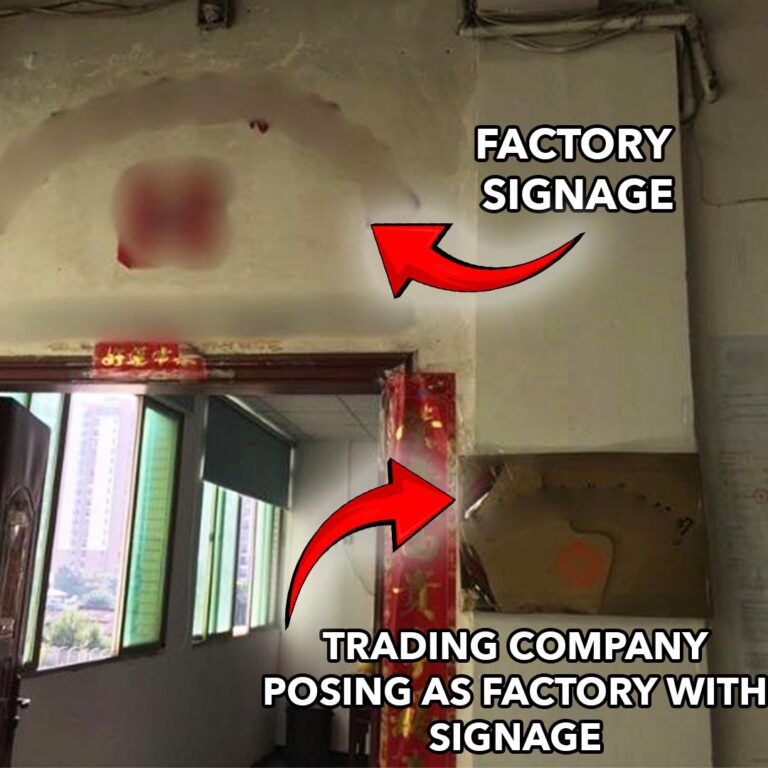
Conduct a thorough search of the factory’s domain. Look for images that clearly display the factory’s name on the building’s façade. Be wary of trading companies posing as factories; they often use temporary signage to deceive buyers.

  • For instance, during one of our factory audits, we discovered a trading company’s sign taped to a factory’s entrance. They had taken photos with this sign to make it appear as if they owned the building. Such practices are common, and factories may allow it to win business from trading companies.

Confirm Fixed Assets
Arrange for a factory audit, even for a test order. Verify that there’s an actual building with the factory’s name on it. A fixed asset like this reduces the likelihood of fraud, as factories are less inclined to run off with your deposit. Additionally, ensure the factory’s business license is prominently displayed inside.

By following these steps—matching the email to the website, verifying the factory’s physical presence, and confirming their business license—you can significantly reduce the risk of supplier fraud.

Linton Expertise

At Linton Group, we include factory audits as part of our service to ensure the legitimacy and reliability of our suppliers. By sharing these insights, we hope to empower brands to make informed decisions and build trustworthy partnerships. Have you had similar experiences or additional tips to share? We’d love to hear your thoughts in the comments below!

Linton Group has two decades of experience in navigating the Black Friday / holiday rush, as well as other major holidays. Prior to the Covid-19 Pandemic, Linton specialized in optimizing supply chains for brick and mortar brands. Linton transitioned after the pandemic to specialize in supply chain solutions in the world of e-commerce to grow with the exponentially increasing holiday season. For the past 4 years, Linton has been able to effectively plan, navigate, and execute streamlined solutions for the holiday season that has empowered our e-commerce partners to experience growth that tracks alongside the ecommerce boom in recent years. To discuss possibilities, schedule a time here – we’d love to chat!

Contact us Today to Learn More About our Services and Discuss your Brand in More Detail:

Global Success: Navigating Overseas Manufacturing for Black Friday 2024

As the digital marketplace continues to expand, so too does the potential for ecommerce brands to capitalize on the holiday shopping frenzy.

With online sales skyrocketing to over $250 billion in the United States alone in 2023, and a staggering $12 billion attributed to Black Friday, the significance of meticulous planning for manufacturing and logistics cannot be overstated.

Beyond mere convenience, early preparation is a strategic necessity, serving to mitigate the myriad risks associated with supply chain disruptions, from material shortages to transportation bottlenecks. To seize the opportunity presented by the holiday surge, brands must ensure their holiday inventory is in hand well before late November.

Holiday Boom

In recent years, the holiday season has proven to be an exponentially prosperous time for all of ecommerce. Online sales in the United States alone in 2023 topped 250 billion dollars, with 12 billion coming from Black Friday alone. Planning manufacturing early for the holiday season, especially Black Friday, is not merely a matter of logistical convenience; it’s a strategic imperative. Being ahead of the curve will mitigate supply chain related risk such as material shortages, production delays, transportation bottlenecks, and unforeseen circumstances.

To effectively capture the holiday surge, brands need to have holiday inventory in hand by late November at the absolute latest. Brands can mitigate risk of delays by acquiring products at an earlier date but can accrue storage fees if utilizing a 3PL or Amazon FBA facility. Brands with in-house warehousing operations can leverage their storage space to their advantage when it comes to preparing a large amount of holiday inventory.


Establishing a Healthy Supplier Relationship

Before any inventory becomes available, even before a production order is placed, brands need to take the crucial step in establishing clear communication channels with suppliers. Ideally, these communication channels should be secured in the early months of the year (Q1). With a healthy supplier relationship, certain arrangements can be made to ensure proper preparation for the holiday season. These arrangements include but are not limited to; acquiring raw materials at an early date, addressing potential production challenges, establishing quality control standards, negotiating favorable production schedules. In certain cases, suppliers will even hold inventory for brands that have established a healthy relationship. This effectively navigates storage fees associated with 3PLs and FBA facilities.


Production and Logistics Planning

After a healthy supplier relationship is secured, production orders need to be planned accordingly with manufacturing and logistics lead time in mind. The product being made, where it is being shipped to, and how it is being shipped are the three main factors in calculating when to place a purchase order. Every product has a unique lead time when it comes to manufacturing, but it is important to identify other lead times associated with the product outside of the production line such as completing product compliance testing and obtaining product compliance certificates. After manufacturing lead time is confirmed, logistics routes and methods need to be investigated and confirmed as well. Ocean, air, and rail (if working with a nearshore supplier) all have their respective pros and cons, so it is important to investigate each option before coming to a conclusion.

Linton Expertise

Linton Group has two decades of experience in navigating the Black Friday / holiday rush, as well as other major holidays. Prior to the Covid-19 Pandemic, Linton specialized in optimizing supply chains for brick and mortar brands. Linton transitioned after the pandemic to specialize in supply chain solutions in the world of e-commerce to grow with the exponentially increasing holiday season. For the past 4 years, Linton has been able to effectively plan, navigate, and execute streamlined solutions for the holiday season that has empowered our e-commerce partners to experience growth that tracks alongside the ecommerce boom in recent years. To discuss possibilities, schedule a time here – we’d love to chat!

Contact us Today to Learn More About our Services and Discuss your Brand in More Detail: