Why Product Development Without Manufacturing Expertise Costs More Than You Think

Most product development firms design first and figure out manufacturing later. That sequence is the most expensive mistake a brand can make.

When design and manufacturing are treated as separate phases, problems surface at the worst possible time: during tooling, during factory validation, or worse, during mass production. By then, fixing them costs 5 to 10 times what it would have cost to address them in development.

Schedule a Consultation

The Gap Between a Prototype and a Production Ready Product

A prototype proves a concept. It does not prove that your product can be manufactured at scale, at target cost, with consistent quality.

The difference between a prototype and a production ready product comes down to Design for Manufacturing (DFM). DFM is the process of designing a product specifically so it can be manufactured efficiently, accounting for material selection, tolerances, tooling constraints, and assembly sequence.

Most development teams skip or undervalue DFM. The result: redesigns, tooling delays, and unit economics that no longer work.


What a Manufacturing First Approach Actually Looks Like

Manufacturing first product development means production constraints inform design decisions from day 1. Not after the CAD files are finished. Not after the first round of samples.

This means:

  • Factory capabilities are evaluated before design is finalized
  • Tooling risk is identified and mitigated during development, not after
  • Golden samples are validated against production grade materials and processes
  • Unit economics are modeled early, so cost targets are realistic

When development and manufacturing are integrated, there are fewer surprises. Fewer rounds of revision. Fewer conversations that start with “we need to redesign this.”


Why Your Manufacturing Partner Matters More Than Your Design Firm

A design firm can make your product look right. A manufacturing partner can tell you whether it can be built at target cost, at target volume, with production grade quality controls.

The distinction matters because production is where margin is made or lost. A product that costs $2 more per unit than projected does not just reduce profit, it changes whether the product is viable.

Real factory relationships, not sourcing middlemen, not broker networks, give you direct access to production intelligence. You get accurate lead times, realistic MOQ expectations, and accountability when something goes wrong on the line.


The Cost of Getting This Wrong

Brands that separate design from manufacturing typically face 2 to 4 additional tooling revisions, 3 to 6 months of added timeline, and margin compression that forces hard trade-offs on quality or pricing.

The fix is not working harder at the end. It is building manufacturing expertise into the front of the process.

Product development and manufacturing are not sequential. They are the same discipline.


Manufacturing-Integrated Product Design With Linton

The product design process is most effective when manufacturing is considered from the start. Linton supports the full product design and manufacturing lifecycle, helping brands move from early concepts to production-ready products through a shared-success model where Linton only wins when the product succeeds.

By integrating product design, engineering, factory evaluation, quality control, and logistics, Linton helps brands reduce risk and deliver physical products that perform reliably in real manufacturing environments. The focus is not just on design deliverables, but on long-term product success in the market.

The Product Design Process: What Actually Matters Before Manufacturing

Key Takeaways

  • The product design process locks in cost, quality, and scalability earlier than most teams expect.
  • Manufacturing decisions should be treated as core design inputs, not downstream fixes.
  • Product designers and product managers must align user needs, business goals, and production constraints early.
  • Brands that integrate manufacturing into the design process avoid costly redesigns and delays later.

Many product design process guides focus on ideation and aesthetics, but often underestimate the manufacturing decisions that determine whether a product actually succeeds in production. A product can look strong on paper and still struggle if cost, quality, or scalability are addressed too late.

This guide focuses on what truly impacts product success once manufacturing enters the picture. At Linton, the product design process is informed by real-world experience across product design, engineering, sourcing, manufacturing, quality control, and logistics. Product designers, product managers, and manufacturing teams work together to align user needs, business goals, and production constraints early, ensuring the final product can be manufactured consistently and at scale.

Schedule a Consultation

Step 1: Define the Product Problem and Business Constraints

The product design process begins by clearly defining the problem the product is meant to solve. This requires more than listing features. Teams must understand how the product fits into a real-world use case and why it matters to the customer.

Key inputs at this stage include:

  • The primary customer pain points the product addresses
  • The intended use case and environment
  • The core user needs the product must satisfy

Alongside the product problem, business constraints must be defined early and treated as non-negotiable inputs that shape design, cost structure, and manufacturing feasibility. These include target price point, margin expectations, and distribution channel such as direct-to-consumer, Amazon, or retail. Early user research and user feedback help validate assumptions and ensure the product problem reflects real market demand rather than internal preferences.

Ignoring business constraints at this stage often leads to redesigns later, when cost and feasibility issues become harder to fix.

Step 2: Competitive Research and Market Reality Check

Competitive research grounds the product design process in market reality. It helps teams understand what already exists and where opportunities for differentiation truly lie.

Effective competitive research evaluates:

  • Materials used in competing physical products
  • Durability and performance over time
  • Pricing and perceived value
  • Quality issues revealed in customer reviews

This research informs more than surface-level design choices. It influences material selection, cost positioning, and manufacturing strategy. The goal is to identify gaps where original design decisions can support differentiation, cost feasibility, and manufacturability.

Step 3: Concept Development With Manufacturing in Mind

Concept development translates insights and requirements into early product concepts. At this stage, originality must be balanced with feasibility.

Design concepts should be evaluated through a manufacturing lens. Product design, engineering feasibility, factory capabilities, and production planning must work together as one integrated system rather than sequential handoffs.

A common failure point occurs when concepts prioritize visual appeal without considering how the product will be produced. Designs that ignore manufacturing constraints often require significant rework once feasibility issues surface, adding cost and delaying timelines.

Step 4: Engineering, Materials, and Feasibility Analysis

Engineering and feasibility analysis determine whether a concept can be produced reliably at scale. This step validates that design decisions align with manufacturing realities.

Material selection is evaluated based on:

  • Cost and long-term availability
  • Durability under real-world use
  • Manufacturing complexity and tooling requirements

Engineering decisions also define tolerances, structural integrity, and finish quality. These choices directly affect unit cost, defect risk, lead times, and the ability to maintain consistent quality at scale. Validating feasibility at this stage protects the broader product development process from costly surprises later.

Step 5: Prototyping, Testing, and Iteration

Prototyping plays a critical role in the product design process, but prototypes are not final products. They are tools for validation and learning.

Prototypes are used to test:

  • Functional performance
  • Fit and ergonomics
  • Material behavior and durability

Testing during this phase focuses on validating how the physical product performs under real-world conditions before committing to mass production. User feedback and performance data guide iteration and refinement. Changes at this stage can impact cost and timeline, which is why iteration should be driven by feasibility and production goals rather than assumptions alone.

Step 6: Factory Evaluation and Manufacturing Planning

Factory evaluation is a strategic part of the product design process, not a transactional sourcing afterthought. The factory chosen will influence scalability, quality consistency, and long-term production success.

Key evaluation factors include:

  • Manufacturing capabilities and equipment
  • Quality systems and inspection processes
  • Experience producing similar physical products

Step 7: Quality Control Planning Before Production

Quality control planning begins before mass production starts. Quality must be built into the product through early design and engineering decisions.

This stage includes:

  • Defining measurable quality standards
  • Setting inspection criteria
  • Reducing defect risk through material and tolerance choices

Quality assurance is not limited to inspection at the end of the line, but is designed into the product through materials, tolerances, and production standards. It is the result of thoughtful design, engineering, and production standards working together to support repeatable manufacturing.

Step 8: Preparing for Manufacturing, Product Launch, and Scale

As the product design process nears completion, teams finalize specifications and prepare for manufacturing and product launch.

This includes:

  • Locking materials, dimensions, and tolerances
  • Finalizing production workflows and timelines
  • Addressing packaging, logistics, and shipping requirements

Early design decisions strongly influence cost stability, launch timing, and the ability to scale production without disruption. A well-executed product design process supports consistent production and smoother growth over time.

Common Mistakes in the Product Design Process

Several recurring mistakes undermine long-term product success:

  • Designing without understanding manufacturing constraints
  • Prioritizing aesthetics over feasibility
  • Delaying cost analysis until design feels complete
  • Treating manufacturing as a separate phase rather than an integrated process

These mistakes are expensive to fix once production begins and often result in delays, redesigns, or margin erosion.

Why the Product Design Process Determines Long-Term Success

The product design process sets the foundation for everything that follows. Early decisions compound over time, shaping cost structure, quality outcomes, lead times, and scalability.

When treated as a strategic business function rather than a purely creative exercise, the product design process becomes a powerful driver of long-term success. Mistakes made at this stage are far more expensive to correct later.

Manufacturing-Integrated Product Design With Linton

The product design process is most effective when manufacturing is considered from the start. Linton supports the full product design and manufacturing lifecycle, helping brands move from early concepts to production-ready products through a shared-success model where Linton only wins when the product succeeds.

By integrating product design, engineering, factory evaluation, quality control, and logistics, Linton helps brands reduce risk and deliver physical products that perform reliably in real manufacturing environments. The focus is not just on design deliverables, but on long-term product success in the market.

Reviewed by the Linton Team

Linton is an end-to-end product development and manufacturing partner with 1,200+ projects delivered across 200+ product categories. Our team helps consumer brands design, source, and manufacture products through a network of 700+ vetted factories.

Consumer Product Design: Designing for Manufacturing, Not Just Market Fit

Key Takeaways

  • Consumer product design impacts manufacturing cost, quality, and scalability, not just aesthetics or market fit.
  • Early design decisions influence tooling, materials, defect risk, and production efficiency.
  • Products designed without manufacturing constraints often face margin erosion, delays, or costly redesigns.
  • Manufacturing-integrated design helps brands launch faster, reduce risk, and scale more predictably.

Many consumer product design discussions focus on market fit, branding, and visual appeal. While these factors matter, they often overlook how design decisions translate into real manufacturing environments. Products that appear ready for market can still encounter cost issues, quality problems, or production delays when manufacturing realities are addressed too late.

Successful consumer product design accounts for manufacturing feasibility, cost control, quality, and scalability from the start, across design, engineering, sourcing, production, quality control, and logistics as one integrated process. At Linton, design decisions are informed by engineering, factory capabilities, production methods, in-house quality control standards, and logistics planning as part of a single, full-lifecycle product development process where Linton is responsible for the final success of the product. This guide explains how consumer product design changes when manufacturing is treated as a core design input, helping brands reduce risk, meet demand, and build products that scale reliably.

Schedule a Consultation

What Consumer Product Design Really Involves

Consumer product design is the process of developing physical products intended for repeat production and commercial sale, where early decisions directly impact unit cost, defect risk, and long-term scalability. Unlike digital design or concept-only ideation, it requires balancing customer needs with manufacturing feasibility and operational constraints.

In many cases, consumer product design involves developing original, custom products rather than modifying existing designs. This applies when materials, dimensions, construction details, or finishes are tailored to a specific brand or market rather than sourced from a generic product catalog. These decisions directly affect how a product is manufactured, inspected, and scaled.

At its core, effective consumer product design balances:

  • Customer needs and real-world use cases
  • Market demand and competitive expectations
  • Manufacturing feasibility and production repeatability

Design elements such as geometry, materials, tolerances, and assembly methods influence tooling costs, defect rates, lead times, and quality consistency. Consumer product design ultimately determines whether a product can be manufactured efficiently and profitably at scale.

Market Fit Is Necessary but Not Sufficient

Market fit alone does not guarantee product success. Many consumer products struggle after launch because they were designed to sell, not to manufacture efficiently.

Products can generate early demand and still fail operationally. Margins may shrink due to inefficient design choices, or production timelines may slip because of complex assemblies and unrealistic tolerances. When manufacturability and cost structure are treated as secondary concerns, problems often surface only after tooling and suppliers are already locked in.

To succeed long term, products must meet customer expectations while remaining feasible to manufacture consistently as demand increases. Market fit, cost control, and production scalability must be evaluated together to avoid margin compression and operational risk.

Designing With Manufacturing Constraints in Mind

Manufacturing constraints, ranging from factory capabilities to tooling limitations and quality control standards, shape nearly every aspect of consumer product design. Ignoring them early often leads to expensive revisions later in the development cycle.

Design decisions should be informed by constraints such as:

  • Material availability and long-term supply stability
  • Tooling requirements and upfront investment
  • Assembly complexity and labor time
  • Achievable tolerances and defect risk

Design decisions made before production begins are far easier and less costly to adjust than changes made after tooling investments and supplier commitments are in place.

In manufacturing-led environments, customization refers to how a product is built, not how it is selected or configured by an end customer. Product customization at the design level may involve variations in materials, dimensions, finishes, or construction methods that affect tooling, assembly time, and quality control.

When manufacturing constraints are integrated into the design process, brands benefit from faster launches, fewer revisions, and more predictable production outcomes.

Material Selection, Durability, and Real-World Use

Material selection plays a critical role in consumer product design. It affects unit cost, durability, perceived quality, and production consistency.

Effective material decisions consider raw material pricing, long-term availability, compatibility with tooling methods, and performance under real-world use conditions. Premium materials can enhance brand perception, but they must align with factory capabilities and quality control standards to remain viable at scale.

Durability and material performance also impact customer experience, particularly for products exposed to repeated use, environmental stress, or shipping conditions. Strong material selection balances performance, cost, durability, and manufacturability to support reliable production over time.

Designing for Cost Without Sacrificing Quality

Cost efficiency is largely determined during the design phase. Many of the most significant cost drivers are established long before production begins.

Material complexity, number of components, assembly time, and defect risk all influence unit economics. Designs with unnecessary variation or overly complex design elements often result in higher labor costs and inconsistent quality.

For brands producing multiple product variations or supporting mass customization, design decisions must account for how variation impacts tooling cost, defect rates, and production efficiency. Manufacturing cost reduction is most effective when it starts at the design level, before tooling, suppliers, and production workflows are locked in—rather than as a corrective step after production begins.

Prototyping as a Design Validation Tool

Prototyping validates more than appearance and basic functionality. It plays a key role in assessing manufacturability, durability, and production readiness.

Effective prototypes help identify assembly challenges, structural weaknesses, and cost misalignment early in the design process. They allow teams to test whether a product can meet performance expectations while remaining feasible to manufacture at scale.

Prototypes should be evaluated against real production environments, including cost targets, factory capabilities, quality standards, and expected demand. Iteration should be driven by performance and feasibility, not visual appeal alone.

Quality Control and Production Planning During Design

Quality control begins during the design phase, not on the factory floor. Products that are difficult to manufacture consistently are also difficult to inspect and maintain over time.

Design-stage quality planning includes defining measurable quality standards, reducing defect risk through material and tolerance choices, and planning for consistent repeat production. Quality is designed into the product through materials, geometry, and production standards rather than inspected in after problems arise.

Common Consumer Product Design Mistakes

Several recurring mistakes undermine consumer product success:

  • Designing without manufacturing input
  • Prioritizing aesthetics over feasibility
  • Underestimating cost implications
  • Delaying cost and quality analysis until production
  • Treating design and manufacturing as separate phases

These issues compound over time, making products harder to scale and more expensive to fix once production is underway.

Why Manufacturing-First Consumer Product Design Wins Long Term

Consumer products designed with manufacturing in mind benefit from lower production costs, higher and more consistent quality, faster time to market, and easier scalability.

Design decisions compound across the product lifecycle. Early alignment between design and manufacturing reduces operational risk and creates a stronger foundation for long-term product success.

Manufacturing-Integrated Consumer Product Design With Linton

Consumer product design is most effective when design and manufacturing are treated as one integrated process. Linton supports consumer product design from initial concept through engineering, factory sourcing, manufacturing, in-house quality control, and logistics, operating as a long-term partner with a shared-success model where Linton only wins when the product succeeds.

By aligning design decisions with real manufacturing environments, Linton helps brands build custom products that go beyond validating market demand. The result is consumer products designed to perform consistently, scale efficiently, and succeed in real production conditions.

Reviewed by the Linton Team

Linton is an end-to-end product development and manufacturing partner with 1,200+ projects delivered across 200+ product categories. Our team helps consumer brands design, source, and manufacture products through a network of 700+ vetted factories.
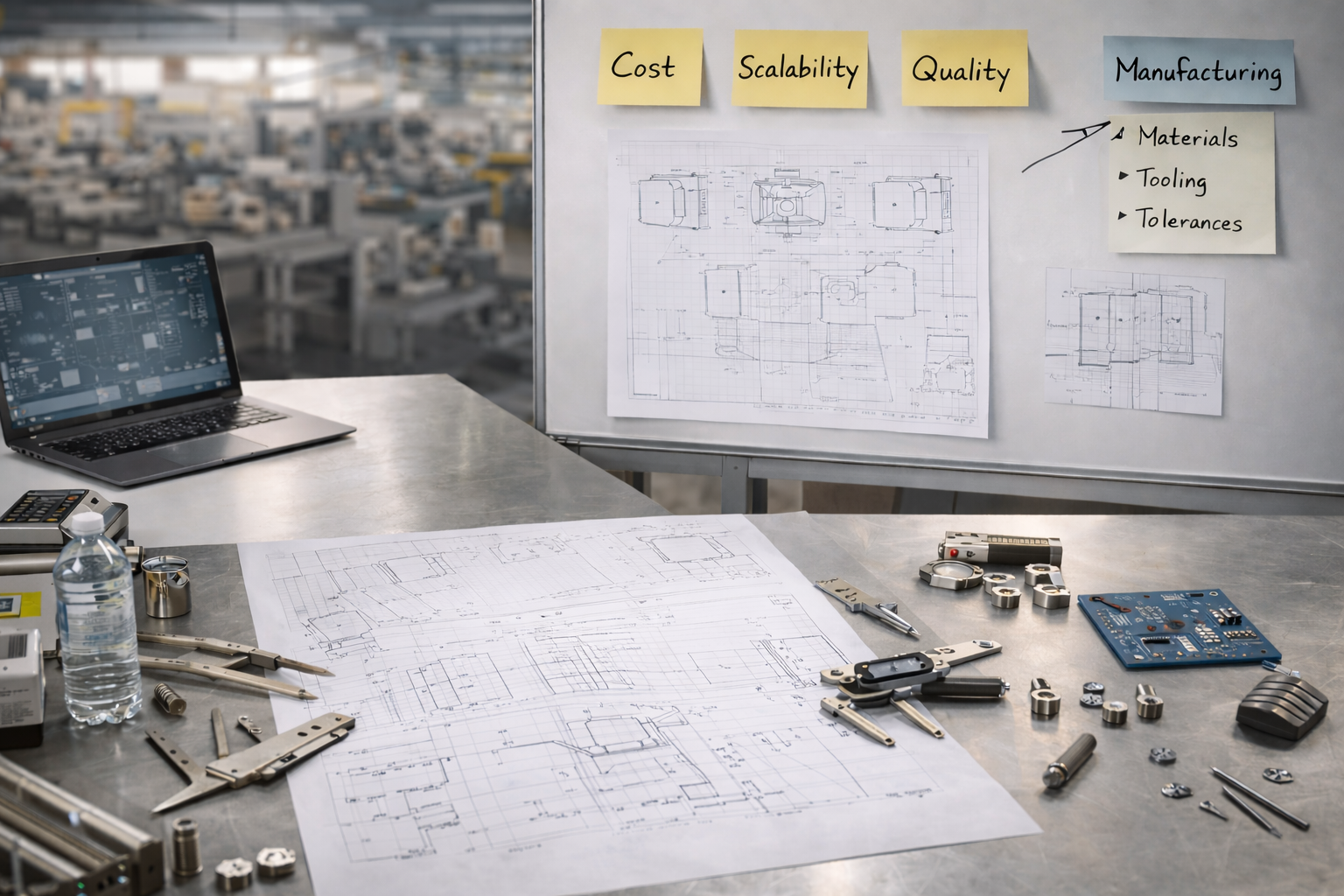
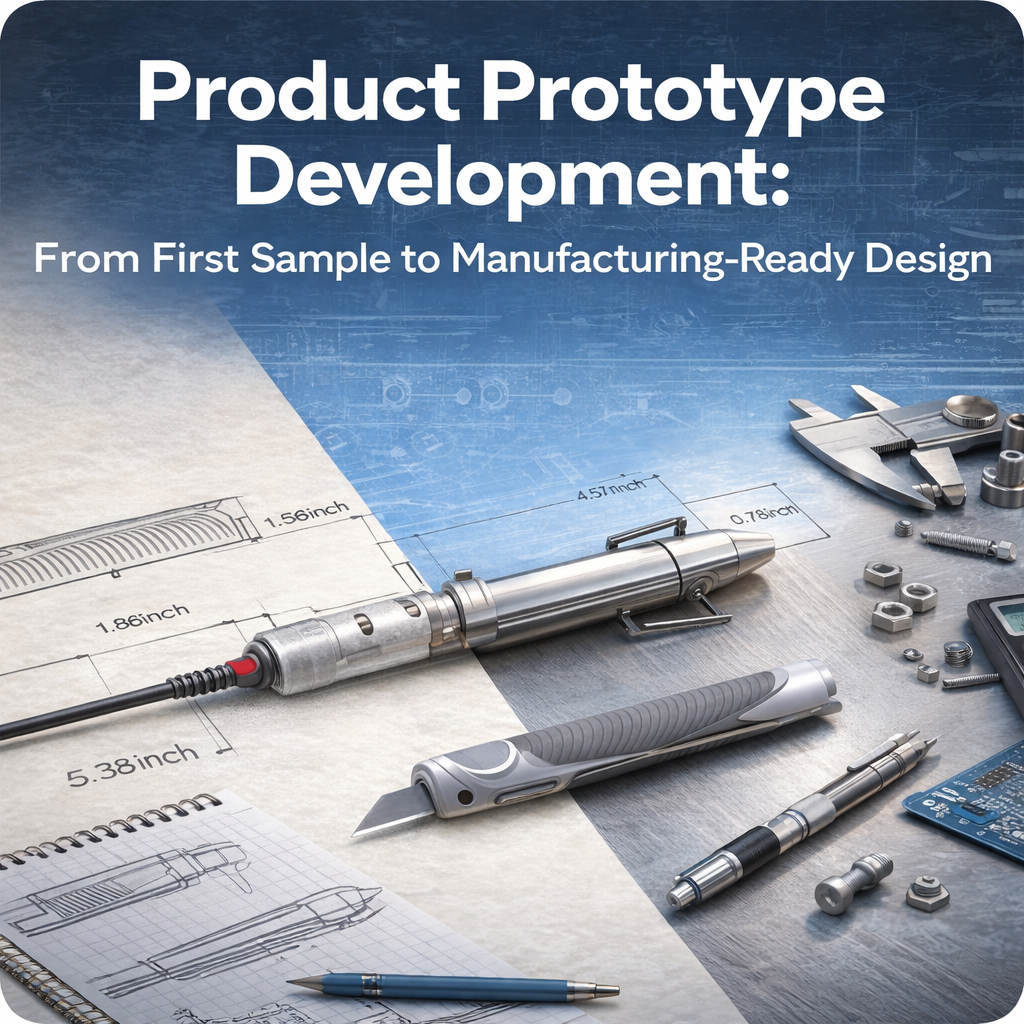
Product Prototype Development: From First Sample to Manufacturing-Ready Design

Key Takeaways

  • Product prototype development bridges the gap between a product idea and scalable manufacturing.
  • Prototypes should validate cost, materials, performance, and production feasibility, not just design intent.
  • Early prototype decisions directly impact tooling, quality control, and unit economics.
  • Manufacturing-first prototype development reduces risk, prevents redesigns, and supports smoother mass production.

Product prototype development is the critical phase where a product moves from concept to reality. It is where assumptions about cost, materials, and performance are tested before any long-term manufacturing commitments are made. When done correctly, prototype development reduces uncertainty and protects brands from expensive mistakes once tooling, suppliers, and production workflows are locked in.

Many brands rush through prototyping without fully understanding manufacturing constraints or production costs. At Linton, prototype development is treated as part of a broader, full-lifecycle product development process, guided by engineering feasibility, real factory capabilities, in-house quality control standards, and long-term scalability. This guide breaks down how product prototype development should work when the end goal is a manufacturing-ready design, not just a good-looking sample.

Schedule a Consultation

What Product Prototype Development Actually Means

  • Concept models that explore form and general layout
  • Functional prototypes that test performance and usability
  • Manufacturing-ready samples that validate materials, tolerances, and production processes

Early prototypes are not meant for mass production. Their role is to identify risks, surface design flaws, and guide decision-making. For brands preparing for manufacturing, product prototype development is less about design exploration and more about risk reduction, quality planning, and repeatable production at scale.

When to Start the Prototype Development Process

Prototype development should begin only after certain fundamentals are defined. Starting too early often creates false confidence and leads to rework.

Before prototyping begins, teams should have clarity around:

  • Core product requirements and intended use
  • Target price point and margin expectations
  • Initial material assumptions and constraints

When prototypes are built without these inputs, they may look promising but fail to reflect real production conditions. Prototype development should be treated as a critical decision gate in the product development process, not a formality to check off before manufacturing.

Step 1: Translating the Design Into a Prototype Plan

The first step in product prototype development is converting a design into a clear prototype plan. This plan defines what the prototype is meant to validate and how success will be measured.

A strong prototype plan clarifies whether the prototype needs to validate:

  • Form and dimensions
  • Functional performance
  • Material behavior
  • Structural durability

Design, engineering, sourcing, and manufacturing considerations must be evaluated together as one integrated system at this stage. Treating these areas as separate phases often leads to prototypes that cannot be scaled. A common mistake is building a prototype without a production context, which can mask cost and feasibility issues until much later.

Step 2: Material Selection and Engineering Feasibility

Material selection is one of the most important decisions in prototype development. Materials affect cost, durability, tooling requirements, and long-term scalability.

During this phase, materials are evaluated based on:

  • Cost and price stability
  • Durability and performance
  • Availability and lead times
  • Manufacturing complexity

Engineering feasibility plays a key role here, particularly how materials and tolerances perform within actual factory processes. Tolerances, wall thickness, structural requirements, and finish quality must align with real factory processes. Material choices that work in a prototype but cannot be supported at scale often lead to redesigns later. Aligning material decisions with available manufacturing methods early protects both cost structure and production timelines.

Step 3: Building and Testing Early Prototypes

Early prototypes are built to learn, not to be perfect. Their purpose is to expose issues before they become expensive.

Testing during this stage focuses on:

  • Fit and ergonomics
  • Functional performance
  • Real-world use conditions

Prototype testing helps teams understand how the product behaves under actual use, not ideal conditions. Feedback from testing informs design changes, material adjustments, and engineering refinements. Iteration at this stage is expected and valuable, as long as it is guided by manufacturing feasibility and cost targets.

Step 4: Iteration, Refinement, and Cost Optimization

As prototypes are tested, designs are refined. Small changes at this stage can have an outsized impact on cost and manufacturability.

Iteration often focuses on:

  • Reducing part count
  • Simplifying assembly
  • Adjusting materials or thickness
  • Improving tolerance consistency

Cost optimization should be part of the prototype phase—before tooling and supplier decisions are finalized, not delayed until production. Decisions made during prototype development influence tooling complexity, defect risk, and unit cost during mass production. Refinement at this stage lays the groundwork for scalable, repeatable manufacturing.

Step 5: Transitioning From Prototype to Manufacturing-Ready Design

A manufacturing-ready design is not simply a prototype that works, but one that can be produced consistently to a defined production standard. It is a design that can be produced consistently at scale.

This stage involves finalizing:

  • Materials and finishes
  • Dimensions and tolerances
  • Specifications and documentation
  • Production processes and workflows

This transition protects brands from surprises during mass production. Many products fail here because prototype development was rushed or incomplete. Taking the time to finalize details during this phase reduces delays, quality issues, and costly tooling changes later.

Step 6: Quality Control and Production Planning

Quality control planning begins during product prototype development, not after production starts. Prototypes should be evaluated with quality standards in mind.

This includes:

  • Defining measurable quality benchmarks
  • Aligning expectations between design and manufacturing
  • Reducing defect risk before scaling production

Quality control is not just inspection. It is a product of material choices, tolerances, and production planning. Incorporating quality considerations during prototype development protects consistency and performance as volume increases.

Common Mistakes in Product Prototype Development

Several recurring mistakes undermine effective prototype development:

  • Treating prototypes as final products
  • Ignoring manufacturing constraints until production
  • Over-engineering early prototypes
  • Skipping cost and scalability analysis
  • Rushing to mass production without sufficient validation

These mistakes increase risk and often lead to redesigns, delays, or margin loss once manufacturing begins.

Why Prototype Development Determines Manufacturing Success

Prototype development decisions directly impact manufacturing outcomes. Choices made during this phase influence:

  • Production cost and unit economics
  • Quality consistency and defect rates
  • Lead times and supplier reliability
  • Scalability during mass production

When prototype development is treated as a strategic phase within the product development process, brands are better positioned for long-term success. Manufacturing-ready designs reduce risk and create smoother transitions into full-scale production.

Manufacturing-First Product Prototype Development With Linton

Product prototype development is most effective when manufacturing is considered from day one. Linton supports prototype development as part of an end-to-end product development process, guiding brands from early concepts through manufacturing-ready design with a shared-success model where Linton is accountable for the final product outcome.

By integrating engineering, material selection, production planning, and quality control into prototype development, Linton helps brands reduce risk, avoid costly revisions, and move confidently toward mass production. Success is measured not by prototypes alone, but by the performance of the final product in real manufacturing environments.

Reviewed by the Linton Team

Linton is an end-to-end product development and manufacturing partner with 1,200+ projects delivered across 200+ product categories. Our team helps consumer brands design, source, and manufacture products through a network of 700+ vetted factories.
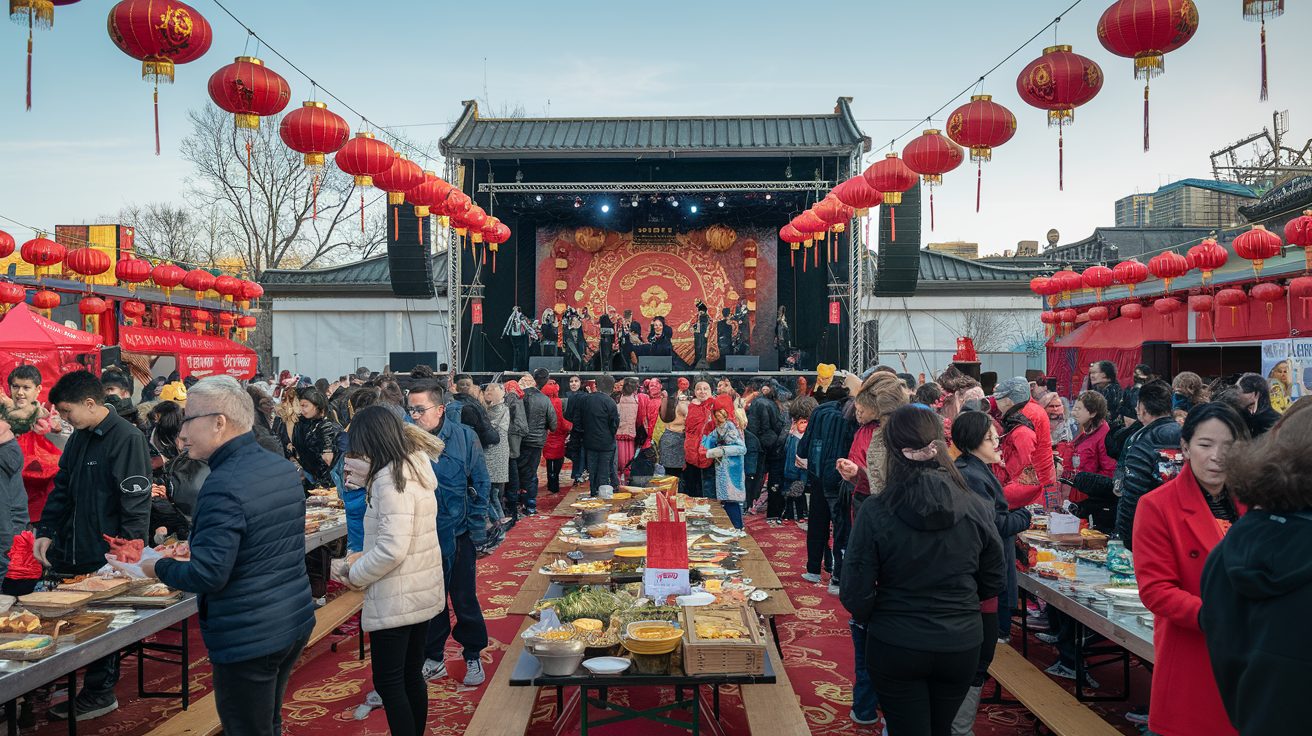
Impact of the Chinese New Year on Production Processes

Clients Frequently Inquire About How The Chinese New Year (CNY) Affects Production Processes

Drawing from over a decade of experience navigating this unique period, Linton Group offers insights to better understand the production landscape from the end of January to mid-late February each year.

From a factory’s standpoint, the weeks leading up to CNY are a highly competitive time for securing production capacity. Much like the bustling American shopping malls just before Christmas, factories experience a surge in demand starting mid-December, as every client aims to finalize shipments before the CNY shutdown.


Astute clients also vie for priority in the production queue when factories resume operations post-CNY.

This strategy is driven by several factors:

  • Securing production capacity amidst the backlog of demand accumulated over nearly a month.
  • Timing production in mid/late February to align with early summer deliveries.
  • Locking in pre-CNY pricing to mitigate potential price increases after the holiday.

The production sequence typically follows a step-based approach. For instance, in manufacturing a backpack, factories begin by ordering raw materials such as fabric from suppliers.

Once materials are received, they proceed to cut the fabric for the entire order, followed by decorating it with elements like logos and brand artwork. Subsequent steps include sewing, assembly, quality control, and packaging.

In The Context of CNY

It is more practical to pause production between these steps rather than attempting to complete half of the order before CNY and the remainder afterward.

We continually learn and adapt to the unique challenges presented by CNY to serve our clients effectively.

Understanding the production line dynamics during this period can empower our client partners to make informed supply chain decisions.

How to Vet a New Supplier: Lessons from the Field

When it comes to sourcing from overseas factories, many seasoned professionals have stories to tell. At Linton Group, we understand the importance of thoroughly vetting new suppliers to avoid costly mistakes.

Here’s a compelling story from our founder, Ben Kong, that underscores the need for diligence and the lessons learned along the way.

A Lesson Learned the Hard Way

Over a decade ago, Ben Kong was working with a new supplier for a client. The initial transaction was smooth, involving a test purchase order (PO) of $5,000 worth of mugs. The goods were delivered, the client was happy, and everything seemed perfect.

With the initial success, the next PO was significantly larger—around $50,000. A 30% deposit was made, but then the supplier vanished, taking $16,000 with them.

This was a classic case of long-play fraud, where the supplier delivered on the first order to gain trust and then disappeared with the deposit from the second, larger order.

Avoiding Supplier Scams: Key Steps

Such scenarios are not uncommon, but they can be avoided with careful vetting. Here are some crucial steps to ensure you’re dealing with a legitimate supplier:

Match the Contact to the Website

Ensure the email domain of your contact exactly matches the factory’s website. This may seem obvious, but it’s a critical step often overlooked.

Verify the Factory’s Existence
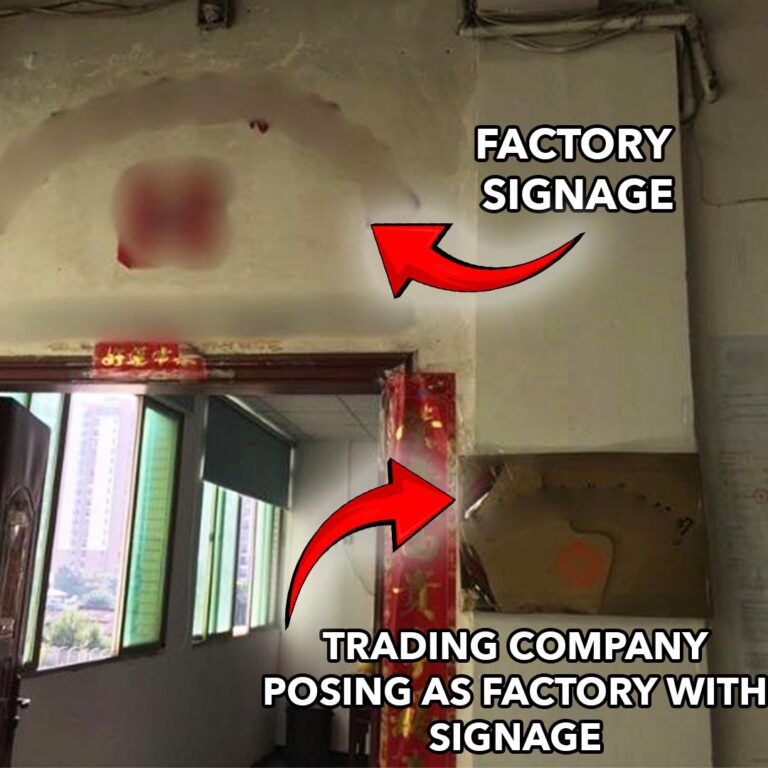
Conduct a thorough search of the factory’s domain. Look for images that clearly display the factory’s name on the building’s façade. Be wary of trading companies posing as factories; they often use temporary signage to deceive buyers.

  • For instance, during one of our factory audits, we discovered a trading company’s sign taped to a factory’s entrance. They had taken photos with this sign to make it appear as if they owned the building. Such practices are common, and factories may allow it to win business from trading companies.

Confirm Fixed Assets
Arrange for a factory audit, even for a test order. Verify that there’s an actual building with the factory’s name on it. A fixed asset like this reduces the likelihood of fraud, as factories are less inclined to run off with your deposit. Additionally, ensure the factory’s business license is prominently displayed inside.

By following these steps—matching the email to the website, verifying the factory’s physical presence, and confirming their business license—you can significantly reduce the risk of supplier fraud.

Linton Expertise

At Linton Group, we include factory audits as part of our service to ensure the legitimacy and reliability of our suppliers. By sharing these insights, we hope to empower brands to make informed decisions and build trustworthy partnerships. Have you had similar experiences or additional tips to share? We’d love to hear your thoughts in the comments below!

Linton Group has two decades of experience in navigating the Black Friday / holiday rush, as well as other major holidays. Prior to the Covid-19 Pandemic, Linton specialized in optimizing supply chains for brick and mortar brands. Linton transitioned after the pandemic to specialize in supply chain solutions in the world of e-commerce to grow with the exponentially increasing holiday season. For the past 4 years, Linton has been able to effectively plan, navigate, and execute streamlined solutions for the holiday season that has empowered our e-commerce partners to experience growth that tracks alongside the ecommerce boom in recent years. To discuss possibilities, schedule a time here – we’d love to chat!

Contact us Today to Learn More About our Services and Discuss your Brand in More Detail: