A Comprehensive Guide to Tooling Molds: A Primer for Companies Venturing into Overseas Manufacturing

Entering the realm of overseas manufacturing can be a game-changer for companies seeking cost-effective production and access to diverse markets. One crucial aspect of this journey is understanding the various types of tooling molds, particularly injection molds and rapid silicone molds. This blog post aims to provide a comprehensive guide for companies new to overseas manufacturing, shedding light on the intricacies of tooling molds. During Phase 1 of Linton Group’s New Product Launch program, we guide our clients through this process, ensuring the right type of tooling is chosen for each unique project.

1. Understanding Tooling Molds

Tooling molds are critical components in the manufacturing process, shaping raw materials into finished products. These molds are essential for achieving precision, consistency, and efficiency in mass production. Two primary types of tooling molds are widely used: injection molds and rapid silicone molds.

2. Injection Molds

Definition and Function

Injection molding is a widely employed manufacturing process that involves injecting molten material into a mold cavity. This mold, known as an injection mold, is typically made from metal and designed to shape the material as it cools and solidifies.

Materials Used

Injection molds are commonly made from steel or aluminum. The choice of material depends on factors such as production volume, material being molded, and cost considerations.

Advantages

  • High precision and repeatability
  • Suitable for high-volume production
  • Wide range of materials can be used

Considerations for Overseas Manufacturing

  • Ensure the overseas manufacturer has the expertise and technology for high-quality injection mold production.
  • Discuss material choices, tooling design, and production capabilities with the overseas partner.

3. Rapid Silicone Molds

Definition and Function

Rapid silicone molding, also known as silicone casting or soft tooling, is a versatile method used for prototyping or low-volume production. It involves creating molds from silicone rubber.

Materials Used

Silicone molds are made from a variety of silicones, each offering specific properties such as flexibility, durability, and heat resistance.

Advantages

  • Quick turnaround for prototyping
  • Cost-effective for low-volume production
  • Suited for complex and intricate designs

Considerations for Overseas Manufacturing

  • Communicate clearly about the required flexibility and durability of the silicone mold.
  • Confirm the overseas manufacturer’s experience with rapid silicone molding and their ability to handle intricate designs.

4. Choosing the Right Tooling Mold

Project Requirements

  • Consider the scale of production.
  • Assess the complexity of the design.
  • Evaluate the material properties required for the final product.

Budgetary Considerations

  • Injection molds often have a higher initial cost but can be more economical for large production runs.
  • Rapid silicone molds are cost-effective for prototyping and low-volume production.

Quality Standards

  •  Verify that the overseas manufacturer adheres to international quality standards for tooling mold production.

Conclusion

Navigating the world of tooling molds in overseas manufacturing requires a nuanced understanding of the specific needs of your project. Whether opting for injection molds for high-volume production or rapid silicone molds for prototyping, thorough communication with the overseas manufacturer is key. By leveraging Linton Group’s decades of manufacturing experience to help make informed decisions and to collaborate effectively with factories, companies can reap the benefits of skilled overseas manufacturing and bring their products to market with precision and efficiency.

Linton Group

Linton Group has over 100 years of combined supply chain experience that has allowed us to effectively navigate Chinese New Year time and time again. With most of our team located across China – our staff knows the ins-and-outs of what it takes to meet deadlines, uphold quality, and maintain project integrity over the holiday period. One of the reasons that we have been able to achieve this is by facilitating healthy transparent relationships between our clients and vetted suppliers.


Reach out to us today to schedule a consultation.

Preparing for Chinese New Year

Chinese New Year is an annual 2+ week festival that starts in the early months of the year (late January to mid-February). It is the largest and most important holiday in China, but is also widely celebrated in other countries that have a high percentage of the Chinese population. This year, the holiday officially starts on February 10th, 2024, but many employers start the holiday early to accommodate employee travel time.

During the Chinese New Year celebration, virtually all businesses are temporarily shut down, and people use the time to reconnect with their families. This ultimately leads to a mass migration of citizens. With China’s population being over 1.4 billion, as mentioned above, many workers require additional days off to accommodate travel time when getting home to their families.

China alone is responsible for over 28% of all global manufacturing. Needless to say, the national holiday has a significant impact on the global market. When considering Chinese New Year, companies across the world need to take many things into consideration to appropriately plan for navigating around the holiday.

Protecting Your Business

When working with Chinese manufacturers, there is a deadline to be met if you want to receive goods on time during the latter end of Q1 of 2024. If goods are not loaded onto a vessel by the start of the holiday, there is most likely going to be a significant delay in receiving that order. It is important to work out lead times with suppliers to establish when the cut-off date will be for an order to get out before the holiday.

Unfortunately, it is already past that cut-off date for some suppliers as we rapidly approach the holiday – depending on the product in question. If an order fails to make it out of a factory before the start of the holiday, it can be at risk of experiencing a lead time extension, as well as potential quality inconsistency.

Many factories will be employing a new workforce upon the conclusion of the holiday. This means that there is a high likelihood that a new wave of line workers, engineers, designers, etc., will be coming in to complete the order left from the start of the holiday. Workers can be new to the industry, unfamiliar with the product, or potentially experience a gap in communication from the workforce that left at the beginning of the holiday – all potential factors that can contribute to lead time and quality issues. Even if the same workforce returns to the factory, it generally takes at least one week for factories to get back to normal output.

To mitigate this risk, it is recommended to schedule replenishment cycles around the Chinese New Year holiday. This will ensure that there is no ongoing project during the break, eliminating potential risk of any lead time or quality issues with a supplier. There are many routes to take, including but not limited to – placing a specific order earlier, doubling the quantity of an order placed in Q4, ordering a smaller LCL shipment right before the holiday, or any other solution out there.

Considerations for Effective Planning

Book Freight Early: To avoid port delays, book freight at least 1 month before the scheduled departure date.

Post-Holiday Demand: Plan for the surge in demand post-holiday. Avoid competing for 1st capacity by planning and scheduling orders well in advance.

New Workforce Dynamics: Account for potential changes in the workforce post-holiday. New staff may impact communication and production familiarity.

Replenishment Scheduling: Strategically schedule replenishment cycles to avoid ongoing projects during the holiday, reducing risks with suppliers.

Effective Planning is Essential: Proper and calculated planning is the key to navigating the complexities of the Chinese New Year.

Two men negotiating in a factory

Final Notes

Once the window is missed for getting production orders shipped before the holiday, the question then becomes how soon can the next order be placed. Unfortunately, many companies fail to effectively plan for the Chinese New Year and create a high demand for shipments upon the completion of the holiday. Many companies fight for 1st capacity with suppliers, which leads to overall longer lead times during the beginning of March. Unfortunately, if a brand is competing for 1st capacity – it is likely improper planning was at fault. Brands who planned and took this into consideration are likely placing orders and scheduling freight months prior to the holiday. All things considered, essentially, calculated planning is the only true way to work around the holiday.

Linton Group has over 100 years of combined supply chain experience that has allowed us to effectively navigate Chinese New Year time and time again. With most of our team located across China – our staff knows the ins-and-outs of what it takes to meet deadlines, uphold quality, and maintain project integrity over the holiday period. One of the reasons that we have been able to achieve this is by facilitating healthy transparent relationships between our clients and vetted suppliers.

Contact us and schedule a consultation today with one of our Sales Executives in Philadelphia, PA.

Join Linton Group at AMZ Innovate 2023


How Linton Group Assists Amazon Sellers

As an Amazon seller, you face fierce competition from other sellers, as well as from Amazon itself. To succeed in this crowded marketplace, you need to find ways to differentiate your products, reduce your costs, and improve your profit margins.

At Linton Group, we specialize in sourcing and supply chain management for Amazon sellers. We work closely with our clients to source products and negotiate the best terms with factories. We help our clients reduce cost-of-goods-sold and improve product quality, ensuring that their products are profitable and meet their customers’ expectations.

Sourcing Products


We have a team of sourcing experts who have extensive experience in finding the right products for Amazon sellers. We work closely with our clients to understand their needs and preferences, and we use our network of suppliers to find products that meet their specifications. Our sourcing services cover over 200 product categories with the exception of FDA regulated products and cosmetics.

Negotiating with Factories

One of the biggest challenges Amazon sellers face is negotiating with factories to get the best terms. At Linton Group, we have years of experience in negotiating with factories, and we know how to get the best prices and terms for our clients. We help our clients save money on their products and improve their profit margins.

Improving Product Quality

Product quality is essential for Amazon sellers. Poor-quality products can lead to negative reviews, returns, and refunds, which can hurt your reputation and your bottom line. At Linton Group, we help our clients improve the quality of their products by working closely with factories to ensure that products meet our clients’ specifications.

Supply Chain Management
Managing the supply chain can be challenging for Amazon sellers, especially if they are sourcing products from overseas. At Linton Group, we have a team of supply chain management experts who can help our clients manage their supply chains from start to finish. We handle all aspects of supply chain management, from product design and development to shipping and logistics.

New Product Development

Launching new products is essential for Amazon sellers who want to stay competitive. At Linton Group, we offer new product development services to help our clients create new products that meet the needs of their customers. We have a team of product development experts who can help our clients with everything from product design to manufacturing to marketing.

At Linton Group, we specialize in sourcing and supply chain management for Amazon sellers. We work closely with our clients to source products and negotiate the best terms with factories. We help our clients reduce cost-of-goods-sold and improve product quality, ensuring that their products are profitable and meet their customers’ expectations.


Incoterms Defined: Risk, Cost, and Liability in Global Commerce

Incoterms – also known as International Commercial Terms – are a standardized set of trade terms used in international contracts for the sale of goods that define the responsibilities of buyers and sellers in export transactions. These defined responsibilities are the universal language of global trade as they facilitate cross-border transactions by establishing a shared framework for the entities involved. Incoterms transcend the complexities of diverse legal systems and cultural backgrounds.

Choosing the right Incoterm ensures that there are no gray areas in the international transfer of goods between buyer and seller. Selecting the appropriate Incoterm will cover risk management, cost allocation, logistics planning, legal compliance, and the overall success of international trade regarding the specific order.

There are 11 individual Incoterms, with 5 being the most commonly used – those being:

EXW (Ex Works)

DDP (Delivery Duty Paid)

FOB (Free on Board)

CIF (Cost, Insurance, Freight)

FAS (Free Alongside Ship)

EXW – Ex Works

EXW places a majority of the responsibility on the buyer. The seller is only responsible for having the goods ready for collection – this is generally at the seller’s factory or warehouse. The buyer is then responsible for all costs, risks, insurance, export / import procedures, loading & unloading, transportation, and delivery to the final destination. EXW is usually used when sellers do not have the capacity to export goods, or a buyer may want to have full control over the logistics process. Essentially, the seller is only responsible for providing the goods to the buyer.

DDP – Delivery Duty Paid

DDP heavily contrasts EXW as a majority of responsibility is placed on the seller. The buyer is only responsible for unloading the goods at the agreed destination, most likely to be the buyer’s or 3PL warehouse. The seller assumes all costs, risks, insurance, export / import procedures, etc. associated with the order. Buyers benefit heavily from utilizing DDP as there are less risks, costs, and liabilities associated with this Incoterm. While this is a beneficial Incoterm for buyers, sellers must accept a high risk of loss if the process is handled incorrectly, therefore sellers may build in premium in their prices to cover their exposure.

FOB – Free On Board

FOB is arguably the most commonly used Incoterm as it splits costs, risk, and liability. The seller is responsible for all risks, costs, and customs clearances associated with getting the order loaded onto the selected vessel, mostly at the port of the origin country. When a seller quotes an order in FOB Incoterm, the price usually includes transportation from the seller’s facility and handling the order / loading the vessel. Once the order is loaded onto the selected vessel, the buyer assumes all risks and costs associated with the order.

CIF – Cost, Insurance, Freight

CIF is very similar to FOB as the risk associated with the order is the same for the seller – the seller assumes all risks and costs until the order is loaded onto the selected vessel. The only difference being that, with CIF Incoterm, the seller is responsible for the costs of the freight and insurance to the port of the destination country. While under FOB Incoterm, the freight and insurance costs are not provided by the seller. CIF Incoterm requires the seller to secure the freight and insurance services until the point when the shipment arrives at the port of the destination country.

FOS – Free Alongside Ship

FAS is conveniently named, as the risk of goods are transferred once the order is placed alongside the selected vessel. The seller assumes responsibility for all costs and risks up until the goods are placed next to the selected vessel. At this point the buyer is then responsible for loading the goods, as well as all costs and risks associated with the final delivery of the order.

Choose Linton Group as a Trusted Advisor

There are a number of other Incoterms that are used to import goods from across the world, but these 5 tend to be some of the most commonly used. Linton determines the proper Incoterm by evaluating a variety of factors including delivery point, transportation costs, risk transfer and documentation. Linton is well-versed in the practice of importing and exporting goods for clients across the globe.
Reach out to us today to schedule a consultation.

Join The Linton Group at Amazon Accelerate 2023

This premier annual seller conference offers a unique experience for all attendees, whether attending in person, in Seattle, or virtually from anywhere.

You’ll hear directly from Amazon senior leaders about the new products, tools, and resources Amazon is launching to help you grow your business. Chart your own learning path and join sessions that will have a direct impact on your business.

Whether just starting out or a seasoned seller, build personal agendas based on your experience and interests.


Schedule a call with the Linton Group Today!

Registration is open!

Visit amazonaccelerate.com to learn more and register today.

How The Linton Group Assists Amazon Sellers

As an Amazon seller, you face fierce competition from other sellers, as well as from Amazon itself. To succeed in this crowded marketplace, you need to find ways to differentiate your products, reduce your costs, and improve your profit margins.

At Linton Group, we specialize in sourcing and supply chain management for Amazon sellers. We work closely with our clients to source products and negotiate the best terms with factories. We help our clients reduce cost-of-goods-sold and improve product quality, ensuring that their products are profitable and meet their customers’ expectations.

Sourcing Products

We have a team of sourcing experts who have extensive experience in finding the right products for Amazon sellers. We work closely with our clients to understand their needs and preferences, and we use our network of suppliers to find products that meet their specifications. Our sourcing services cover over 200 product categories with the exception of FDA regulated products and cosmetics.

Negotiating with Factories

One of the biggest challenges Amazon sellers face is negotiating with factories to get the best terms. At Linton Group, we have years of experience in negotiating with factories, and we know how to get the best prices and terms for our clients. We help our clients save money on their products and improve their profit margins.

Improving Product Quality

Product quality is essential for Amazon sellers. Poor-quality products can lead to negative reviews, returns, and refunds, which can hurt your reputation and your bottom line. At Linton Group, we help our clients improve the quality of their products by working closely with factories to ensure that products meet our clients’ specifications.

Supply Chain Management
Managing the supply chain can be challenging for Amazon sellers, especially if they are sourcing products from overseas. At Linton Group, we have a team of supply chain management experts who can help our clients manage their supply chains from start to finish. We handle all aspects of supply chain management, from product design and development to shipping and logistics.

New Product Development

Launching new products is essential for Amazon sellers who want to stay competitive. At Linton Group, we offer new product development services to help our clients create new products that meet the needs of their customers. We have a team of product development experts who can help our clients with everything from product design to manufacturing to marketing.

At Linton Group, we specialize in sourcing and supply chain management for Amazon sellers. We work closely with our clients to source products and negotiate the best terms with factories. We help our clients reduce cost-of-goods-sold and improve product quality, ensuring that their products are profitable and meet their customers’ expectations.

LTL vs. FTL: Choosing the Right Freight Option for Your Business

As brands scale and optimize their domestic logistics, trucking from import ports to their warehouse destinations, the decision between Less Than Truckload (LTL) and Full Truck Load (FTL) transportation becomes crucial. Brands often lean towards FTL to fulfill bigger orders, while finding LTL more suitable for frequent small orders. At Linton, we help our clients make informed choices considering shipment size, product type, lead time standards, and cost to ensure the most practical and cost-effective method is utilized. For those who are unfamiliar with LTL and FTL, here is a brief description in simplest terms: LTL is when a shipment shares trailer space with other shipments, and FTL is when one singular shipment occupies an entire trailer.

Each method of transportation has its unique advantages and disadvantages. When it comes to choosing which method to use, brands need to take multiple things into consideration. These include but are not limited to: shipment size, product type, lead time standards, and cost. At Linton, we work alongside our clients to ensure that the most practical and cost effective method of transportation is being utilized.

Full Truck Load (FTL)

FTL is more common among brands who fulfill their orders with bigger shipments that tend to weigh over 15,000 pounds, or take up over 3,000 cubic feet. Brands who utilize FTL usually have a longer replenishment cycle as well, due to having a larger inventory capacity. This method is cost effective in comparison to utilizing multiple LTL shipments as unit cost is lower. FTL utilizes a direct route to the final destination as there is only one shipment within the trailer. Since there is only one stop and one shipment, FTL tends to have much shorter lead times than LTL. Quality standards are higher with FTL too, since the product is isolated. Another factor that contributes to a higher quality standard is that the freight is only loaded and unloaded once, meaning there is less opportunity for the shipment to be damaged during handling.

Less Than Truckload (LTL)

LTL is common among brands that utilize frequent small shipments for their smaller replenishment orders. These shipments can range from as small as 150 pounds up to over 15,000 pounds, and can be as small as a few cases to over 3,000 cubic feet as well . When shipments are on the larger end but not quite the size of a full trailer, brands need to assess the cost of both LTL and FTL as it may be more cost effective to utilize FTL and have some empty space in the trailer. LTL differs from FTL in regards to cost as brands only pay for the space they use. Overall, it can be cheaper, but unit cost is higher in comparison to FTL. While LTL is ideal for small shipments, there are setbacks in regards to the handling process.

Potential Setbacks of LTL


Exterior view of a loading dock

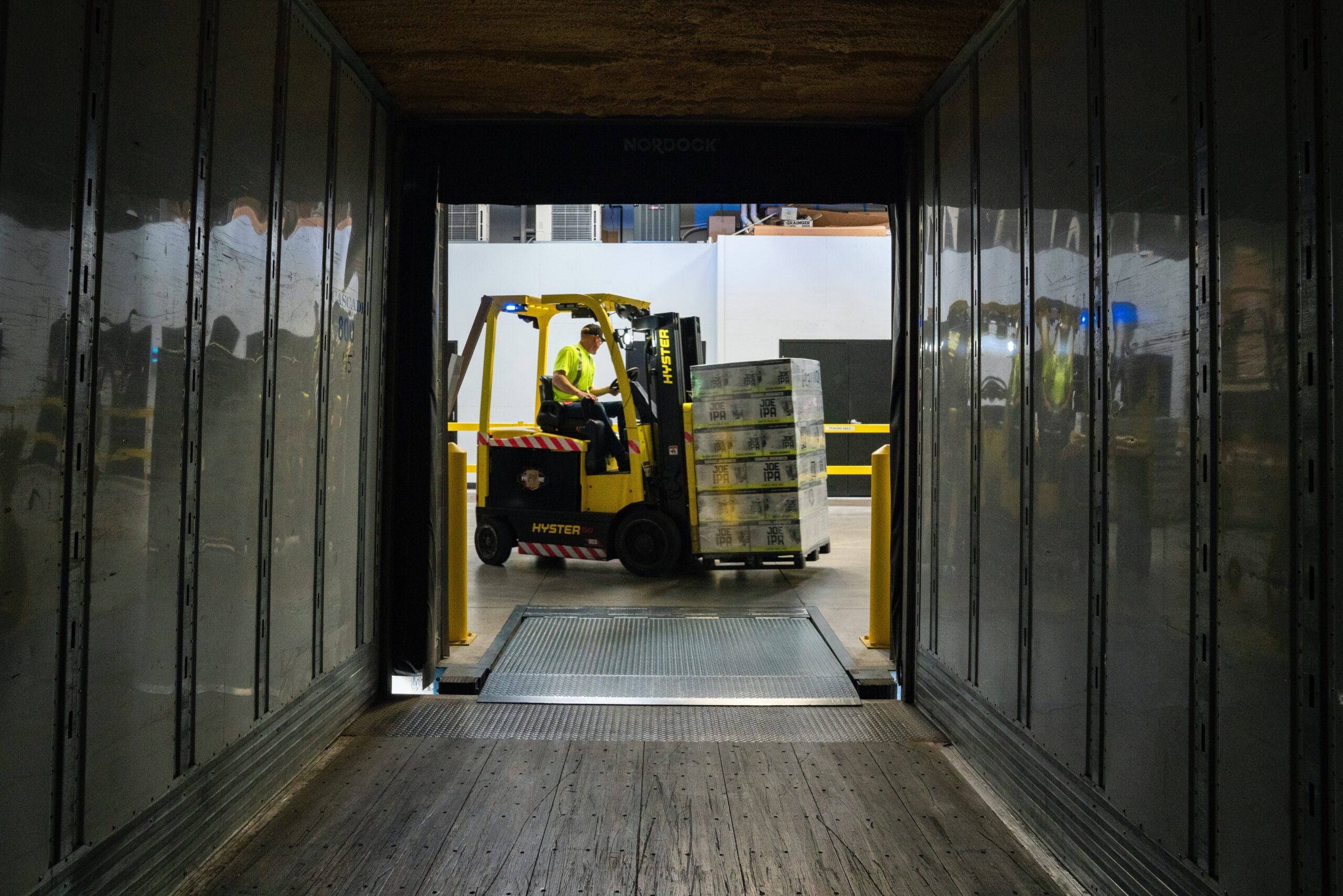
The two main setbacks of utilizing LTL are lead time and quality standards. Since there are multiple shipments, multiple stops are required.Not only does the transportation process tend to be longer, but the handling process is longer as well. When loading LTL shipments, brands rely on third parties to correctly load and unload their product alongside other shipments. This means ensuring that shipments are placed into a trailer in the correct order to allow for a fast unloading process at each stop. If the order of shipments within a trailer is incorrect, additional handling is required as the entire trailer may need to be unloaded just to get a specific shipment out. This can lead to issues in quality as well, due to the shipment being handled on multiple occasions before it is able to reach its final destination.

There are even some rare instances in which goods can be left behind. Let’s say an LTL trailer was loaded in the incorrect order, which unfortunately happens more often than not, and the shipment at the first stop was placed in the front of the trailer. The entire trailer will need to be stripped, meaning that product will inevitably be scattered throughout the dock. In a perfect scenario, the operator handling the product should be able to get the correct shipment out, and then fix the order of the remaining shipments before sending the trailer to its next stop – this process can take an operator several hours and this is where product gets misplaced and left behind. Unfortunately, this is not always the case. The operator may put the shipments back in the same incorrect order in which they arrived, which leads to the same process being repeated at the next stop. Rearranging pallets for hours is a long and grueling process, and mistakes happen. Even if all of the products are put back onto a trailer in the correct order, there is no guarantee that a shipment wasn’t damaged in the handling process.

FTL or LTL?

Making the right choice is essential for ensuring quality and lead time expectations are met. After review, it may be worth it to pay slightly more for the utilization of FTL. At Linton, we work with our clients to identify the best option before making the crucial decision. We assist in identifying a reliable and cost effective freight solution and aid in assessing which method is the right choice for that specific shipment. With our comprehensive approach, your logistics operations are poised for success. Delivering seamless and efficient results every step of the way.

Linton offers full A-Z supply chain services. Whether it be sourcing, manufacturing, international or domestic logistics – we can help you accomplish your goals while saving you precious money. Interested to hear what we can do for you? If so, schedule a time to chat with our team.