


Carbon Fiber Manufacturing: From Idea to Production-Ready Part

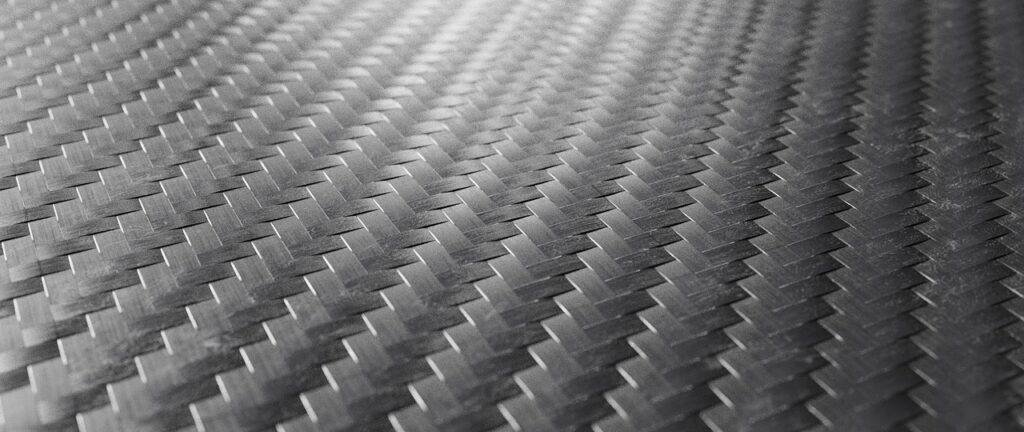
Most carbon fiber products start as a conviction. A brand knows their paddle should hit harder, their racket should feel more stable through contact, or their part should be lighter without giving up stiffness. The physics says carbon fiber can do it. The renderings look right. The first hand-built sample even feels right. Then the part has to be made a thousand times, at a cost that works, with the same feel every time. That is the gap between a carbon fiber idea that works in theory and a carbon fiber manufacturing process that turns it into a product. Linton has developed carbon fiber parts across pickleball, racket sports, and performance hardware, and the pattern repeats: the gap is almost never about the idea. It is about the decisions underneath it. This guide walks through those decisions in the order they actually get made.
Key Takeaways
- Carbon fiber manufacturing is a chain of linked decisions — fiber, layup, molding process, tooling, and cure — and the early choices quietly set the cost, feel, and lead time of everything downstream.
- Performance lives in the layup, not the material label. Two parts with identical fiber and resin can behave completely differently depending on ply orientation and stacking.
- The molding process is a cost-structure decision. Compression molding, bladder molding, filament winding, autoclave cure, and resin infusion each fit a different part geometry, volume, and price target.
- A prototype proves the idea. It does not prove the process. Treating those as one milestone is where most carbon fiber launch timelines fail.
It Starts With the Fiber, Not the Mold
People tend to picture the mold first. The right starting point is one step earlier, with the material itself, because the fiber choice quietly decides almost everything that follows.
Carbon fiber is not one material. It comes in different tow sizes — 1K, 3K, 12K, 24K — which is shorthand for how many filaments are bundled in a strand. It comes in different moduli, from standard-modulus fibers like T300 up through intermediate (T700, T800) and high-modulus grades. A high-modulus fiber is stiffer but more brittle and far more expensive. A tougher standard-modulus fiber absorbs impact better and costs a fraction as much. For a pickleball paddle face that takes thousands of repeated impacts, the most expensive fiber on the shelf is often the wrong answer.
Then there is the form. Prepreg — fabric pre-impregnated with a measured amount of resin and kept cold until cure — gives tight control over fiber-to-resin ratio and consistency, which matters for performance parts. Dry fiber with separately injected resin is cheaper at volume but harder to keep consistent. The resin system matters too: a standard epoxy, a toughened epoxy, or a thermoplastic each cures differently, demands different equipment, and behaves differently when the part flexes or gets hot.
None of these choices happen in isolation. Pick a high-modulus prepreg and you have committed to a certain cure temperature, a certain tooling approach, a certain cost floor, and a certain feel — before anyone has cut a single ply. Getting this layer right early is the cheapest place to make a decision. Getting it wrong is the most expensive place to discover one.
The Layup Is Where the Performance Actually Lives
Two parts can use identical fiber and resin and perform completely differently, because performance in a composite comes from how the layers are oriented and stacked. From the outside this looks like guesswork. It is disciplined engineering.
Fibers carry load along their length and do very little across it. A ply laid at 0° stiffens the part in one direction, a 90° ply handles the cross direction, and ±45° plies control twist and torsion. The order you stack them in, how many of each, and how you balance them is the ply schedule — and it is where you tune the feel of the finished product.
A paddle face and a racket shaft want opposite things. A paddle face wants a controlled balance of stiffness and a little give, plus a surface ply chosen partly for how it grips the ball — surface texture, peel-ply finish, and the spin characteristics brands increasingly compete on. A hollow racket shaft wants high bending stiffness with carefully tuned torsional flex so the frame stays stable through an off-center hit. An automotive structural part wants a near quasi-isotropic layout so it behaves predictably under loads coming from several directions at once.
This is where a brand’s theory meets production reality. “Make it stiffer” is not a single dial. Stiffer where, in which direction, at what weight, and what does it do to durability and the way the part feels in the hand? Translating a brand’s intent — this should feel more stable, this should pop more — into an actual ply schedule is one of the most valuable conversations in the entire development process, and it is far cheaper to have on paper than to discover after the tooling is cut.
The Process Decides the Product — and the Cost
Once the material and layup are settled, the manufacturing process is the next fork, and it is a big one. The same part can often be made several ways, and each method carries its own tooling cost, volume sweet spot, tolerance, surface finish, and unit economics. Choosing the process is really choosing your cost structure.
Carbon Fiber Molding: The Process Decides the Cost
The same part can be made several ways. Each method sets its own tooling cost, volume sweet spot, and unit economics.
| Process | How it works | Best fit | Tooling cost & volume |
|---|---|---|---|
| Compression molding | Layup pressed between matched, heated metal dies | Flatter, high-volume parts. Most paddle faces live here | Higher upfront tooling; per-part cost and consistency at volume are hard to beat |
| Bladder molding | Internal air bladder presses the layup outward against a closed mold | Strong, hollow, thin-walled parts: racket frames, bike tubes | Moderate tooling; mid-to-high volume with even walls |
| Filament winding | Resin-coated fiber wrapped around a rotating mandrel at precise angles | Tubes and shafts: handles, driveshafts, pressure vessels | Moderate tooling; repeat production of tubular parts |
| Prepreg + autoclave / oven | Prepreg layup cured under controlled heat and pressure | Structural automotive and aerospace-grade parts | Most capital-intensive; lower volume where consistency justifies the cost |
| RTM / vacuum infusion | Resin driven through dry fiber in a closed or bagged mold | Larger or more complex parts | Lower tooling than autoclave; trade-off in fiber-to-resin control |
There is no best process in the abstract. There is only the best fit for this part, this volume, and this price target. A design optimized for a hand-laid prototype and a design optimized for compression-molded production are not the same design — and the moment a brand commits to one without thinking about the other, lead time and cost both start to drift. For a fuller breakdown of where tooling sits inside total project cost, see our guide on product development costs.
Tooling and Cure: Where Prototypes and Production Quietly Split
This is the trap that catches the most teams. A prototype gets made one way, everyone signs off on the feel, and then production reveals that the part cannot be made the same way at scale — or can, but at 3 times the expected cost.
Tooling is the first reason. A machined aluminum mold is cheaper and faster to cut but wears faster. Hardened steel costs more and takes longer but holds tolerance over big runs. The mold’s surface finish becomes the part’s surface finish. Draft angles, parting lines, and how the part releases all have to be designed in from the start, not discovered later. This is the same tooling logic we lay out in our guide to rapid molding as a bridge between prototype and production tooling — composites simply raise the stakes.
Cure is the second. Composite parts are made and finished in the same step: the resin cures under a controlled recipe of temperature ramps, dwell times, and pressure. Get the cure cycle wrong and you get voids, dry spots, or warping, none of which can be sanded out afterward. A cure cycle that works in a small lab oven does not automatically scale to a production press or a large autoclave, and matching the two is real work.
The lesson worth repeating: a prototype proves the idea, but it does not prove the process. Those are 2 different milestones, and treating them as one is what breaks launch timelines.
Why Manufacturing Know-How Compresses Lead Time
Here is the part that matters most to a brand watching a launch calendar. Most carbon fiber delays do not come from a hard engineering problem. They come from re-spins — a design that cannot be molded, a fiber choice that quietly forced an expensive cure, a prototype that cannot scale. Each re-spin means new tooling, new samples, new testing, and weeks or months lost.
Manufacturing knowledge pays for itself by killing those loops before they start. When the material, layup, process, tooling, and cure are reasoned through together — and reasoned through early, with the factory floor in the room — you commit to tooling once instead of 3 times. On a performance product, that is often the difference between making a season and missing it.
This is Design for Manufacturing (DFM) in the most literal sense: designing the part and the process at the same time, so the thing you prototype is the thing you can actually produce.
How Linton Works With Brands on Carbon Fiber
We sit in this gap on purpose. Brands bring the vision, the performance target, and the understanding of what their athletes and customers want to feel. Linton brings the carbon fiber process knowledge and the factory relationships to turn that intent into a part — translating “make it pop more” into a fiber, a ply schedule, a molding process, and a tooling plan that holds up at volume.
We have done this across pickleball paddles, racket sports, and performance hardware, and the pattern repeats every time: the idea is rarely the bottleneck. The path from idea to a manufacturable part is. With a China-based supply chain, hands-on experience across the molding methods above, and a network of 700+ vetted factories, our product design and development program takes carbon fiber products from concept through Factory Validation, and our custom product manufacturing program carries the same part into Mass Production — so brands walk the path once instead of 3 times.
If you are sitting on a carbon fiber product idea and trying to figure out how it actually gets made, start a conversation with Linton before the tooling gets cut.
Frequently Asked Questions
What is carbon fiber manufacturing?
Carbon fiber manufacturing, in the product sense, is the process of turning carbon fiber and resin into a finished part through fiber selection, layup, molding, tooling, and cure. It is separate from producing raw carbon fiber from PAN precursor, which a handful of large material suppliers handle. Brands developing paddles, frames, or structural parts are buying the former.
How are carbon fiber parts made?
Carbon fiber parts are made by laying plies of fiber, either prepreg or dry fabric, into a mold in specified orientations, then consolidating them under heat and pressure until the resin cures. Common methods include compression molding, bladder molding, filament winding, autoclave cure, and resin infusion. The part is formed and finished in one step, so cure defects cannot be sanded out afterward.
Which carbon fiber manufacturing process is best for my product?
The best carbon fiber manufacturing process depends on part geometry, production volume, and target price, not on which method is most advanced. Compression molding suits flat or shallow parts at volume, bladder molding suits hollow shapes like shafts, filament winding suits tubes, and autoclave cure suits low-volume performance parts. Each carries different tooling cost and unit economics.
Why is carbon fiber manufacturing so expensive?
Carbon fiber manufacturing is expensive because finished part cost is driven more by process than by material. Layup is skilled manual work, cure requires controlled temperature and pressure cycles, and hardened steel tooling is a significant upfront investment. High-modulus fibers add cost and are often the wrong choice for impact-heavy products like paddles, where a tougher standard-modulus fiber performs better.
What is the difference between prepreg and dry carbon fiber?
Prepreg is fabric pre-impregnated with a measured amount of resin and stored cold until cure, which gives tight control over fiber-to-resin ratio and part consistency. Dry fiber is laid up without resin and infused separately, which costs less at volume but is harder to keep consistent. Performance parts usually justify prepreg. Cost-driven parts often do not.
Does a working carbon fiber prototype mean the part is ready for production?
No. A prototype proves the idea works. It does not prove the part can be made repeatedly at the target cost. Hand-laid prototypes often cannot be reproduced by the production process, or only at several times the expected cost. Linton’s product design and development process evaluates manufacturability, factory capabilities, tooling requirements, and production feasibility before a product moves into full-scale manufacturing.
What is a ply schedule in carbon fiber manufacturing?
A ply schedule specifies how many carbon fiber layers a part uses, in what orientation, and in what order. Fibers carry load along their length, so 0°, 90°, and ±45° plies control stiffness, cross-direction strength, and torsion respectively. Two parts with identical fiber and resin can perform completely differently based on the ply schedule alone.
Ben Kong
Founder & CEO | Linton Group
Ben brings over 26 years of experience in product design and overseas manufacturing. Having lived and operated businesses across China and North America, he founded Linton to help brands design and develop production-ready products through practical engineering and strong factory partnerships.
View Author PageWondering if your product could be built better, faster, or at a lower cost?
Related Posts
Key Takeaways AQL (Acceptable Quality Level, or Acceptance Quality Limit) is an acceptance-sampling standard used to determine whether a production lot meets an agreed quality threshold by inspecting a sample rather than every unit. The sample size and accept/reject numbers come from standardized tables in ANSI/ASQ Z1.4 and ISO 2859-1, not from the factory’s judgment […]
Read More
Key Takeaways Contract manufacturing in China works when a product has finished specifications, a realistic order volume, and defined quality standards, and becomes risky without them Vetting a factory means more than checking a business license. It requires a physical or remote audit and a pilot run measured against written acceptance criteria IP protection comes […]
Read More
Key Takeaways Product creation is a sequence of validation, design, and manufacturing decisions, not a single creative leap from idea to shelf Skipping market validation is the most common reason early product development stalls after money has already been spent Decisions made during concept and design carry through to manufacturability, and get more expensive to […]
Read More